

What is the granulation efficiency of a PA Granulator?
May 16, 2025
As a seasoned supplier of PA Granulators, I've witnessed firsthand the critical role these machines play in the plastics processing industry. Granulation efficiency is a term that often comes up in discussions with our clients, and it's a concept that holds significant importance for anyone involved in plastic pellet production. In this blog post, I'll delve into what granulation efficiency means in the context of a PA Granulator, the factors that influence it, and how our machines are designed to optimize this crucial metric.

Understanding Granulation Efficiency
Granulation efficiency can be defined as the ratio of the amount of high - quality plastic pellets produced to the total amount of raw plastic material fed into the granulator, typically expressed as a percentage. A high granulation efficiency indicates that the granulator is effectively converting the raw plastic into usable pellets with minimal waste.

For a PA (Polyamide) Granulator, this efficiency is of utmost importance. PA is a widely used engineering plastic known for its excellent mechanical properties, such as high strength, toughness, and abrasion resistance. It's used in various industries, including automotive, electronics, and textiles. Therefore, producing high - quality PA pellets efficiently is essential for manufacturers to meet the demands of these industries while keeping production costs in check.
Factors Affecting Granulation Efficiency
1. Machine Design
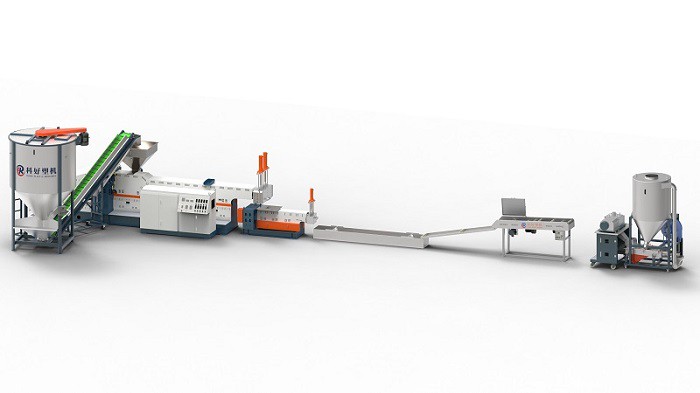
The design of the PA Granulator plays a pivotal role in determining its granulation efficiency. Our PA Granulator is engineered with precision to ensure optimal performance. The cutting mechanism is one of the most critical aspects. A sharp and well - designed cutting blade can make clean cuts through the plastic, resulting in uniform pellet size. This uniformity is crucial as it affects the flowability and processing characteristics of the pellets.
The feeding system also impacts efficiency. A consistent and well - regulated feed of raw plastic material ensures that the granulator operates at its peak capacity. Our machines are equipped with advanced feeding systems that can handle different types of PA materials, whether in the form of sheets, rods, or waste plastic parts.

2. Material Properties
The properties of the PA material itself can significantly influence granulation efficiency. PA comes in different grades, each with its own melting point, viscosity, and mechanical properties. For example, high - viscosity PA materials may require more energy to cut and granulate compared to low - viscosity ones. Our team of experts has extensive experience in dealing with various PA grades and can provide customized solutions to ensure efficient granulation regardless of the material's properties.
3. Operating Conditions
The operating conditions of the granulator, such as temperature, speed, and pressure, also play a crucial role. Maintaining the right temperature is essential as it affects the plasticity of the PA material. If the temperature is too low, the plastic may be too hard to cut, leading to uneven pellet sizes and reduced efficiency. On the other hand, if the temperature is too high, the plastic may melt and stick to the cutting blades, causing clogging and downtime.
The cutting speed and pressure also need to be carefully adjusted. A higher cutting speed can increase the throughput, but it may also result in lower - quality pellets if not properly controlled. Our PA Granulators are equipped with advanced control systems that allow operators to fine - tune these parameters for optimal performance.
Measuring Granulation Efficiency
Measuring granulation efficiency is not a straightforward process. It typically involves collecting and analyzing data on the input and output of the granulator. The input is the amount of raw PA material fed into the machine, while the output is the amount of high - quality pellets produced. Quality control measures are also essential to ensure that the pellets meet the required standards in terms of size, shape, and physical properties.
One common method is to use a sieve analysis to separate the pellets into different size fractions. The percentage of pellets within the desired size range is then calculated. Additionally, other quality parameters such as density, moisture content, and color can also be measured to assess the overall quality of the pellets.
How Our PA Granulators Improve Efficiency
Our company has invested heavily in research and development to improve the granulation efficiency of our PA Granulators. We use the latest technology and high - quality materials in the manufacturing process. For example, our cutting blades are made from special alloys that offer excellent sharpness and durability, reducing the need for frequent blade changes.
Our machines are also designed with energy - saving features. By optimizing the motor power and reducing friction in the mechanical components, we can lower the energy consumption of the granulator without sacrificing performance. This not only reduces operating costs for our clients but also makes our machines more environmentally friendly.
In addition, we provide comprehensive after - sales service, including training for operators. Our technicians can help clients set up the granulator correctly and adjust the operating parameters to achieve the highest possible granulation efficiency.
Comparison with Other Granulators
When comparing our PA Granulator with other types of granulators, such as PP Pelletizing Machine and ABS Granulator Machine, there are some key differences. Each type of plastic has its own unique properties, and the granulation process needs to be tailored accordingly.
PP (Polypropylene) is a lightweight and flexible plastic, while ABS (Acrylonitrile Butadiene Styrene) is known for its high impact resistance. Our PA Granulator is specifically designed to handle the unique properties of PA, such as its high melting point and toughness. However, the basic principles of granulation, such as efficient cutting and uniform pellet production, are common to all these machines.
Conclusion and Call to Action
In conclusion, granulation efficiency is a critical factor in the performance of a PA Granulator. By understanding the factors that affect efficiency, such as machine design, material properties, and operating conditions, manufacturers can optimize their production processes and produce high - quality PA pellets.
Our company is committed to providing the best - in - class PA Granulators that offer high granulation efficiency, reliability, and energy savings. If you're in the market for a PA Granulator or have any questions about our products, we encourage you to reach out to us. Our team of experts is ready to assist you in finding the right solution for your specific needs. Whether you're a small - scale manufacturer or a large industrial enterprise, we have the experience and resources to support your plastic pellet production requirements.
References
- "Plastics Processing Technology" by John Murphy
- "Handbook of Plastic Granulation" by David Smith
- Industry reports on plastic granulation efficiency from leading market research firms.